

Why Municipalities Should Tap Third-Party Controls Firms for Capital Improvement Bond Programs
When voters approve a major bond program, they are not just authorizing debt. They are placing political capital, public trust, and years of tax revenue on the line. Yet in too many jurisdictions, once the press conference is over, the hard work of managing hundreds of millions in projects gets bolted onto already overextended staff—or left to whichever design or construction team happens to be first in the door.
That approach made a kind of sense when capital programs were smaller and less complex. It is increasingly misaligned with reality.
Large infrastructure bond programs now resemble multi-year investment portfolios more than one-off construction jobs. They span dozens of projects, multiple funding sources, intricate procurement rules, inflation risk, federal compliance requirements, environmental review, and volatile construction markets. In that environment, municipalities are beginning to ask a critical question: Who is minding the controls?
The Missing Discipline: Program Controls
“Controls” sounds technical, but it is simply the discipline of tying together scope, schedule, budget, risk, and performance into a single, coherent system.
In practice, that means:
- A master schedule that integrates every project and funding milestone
- Program-level cash-flow forecasts and variance tracking
- Standardized cost coding across projects and vendors
- Change-order controls that distinguish needs from wants
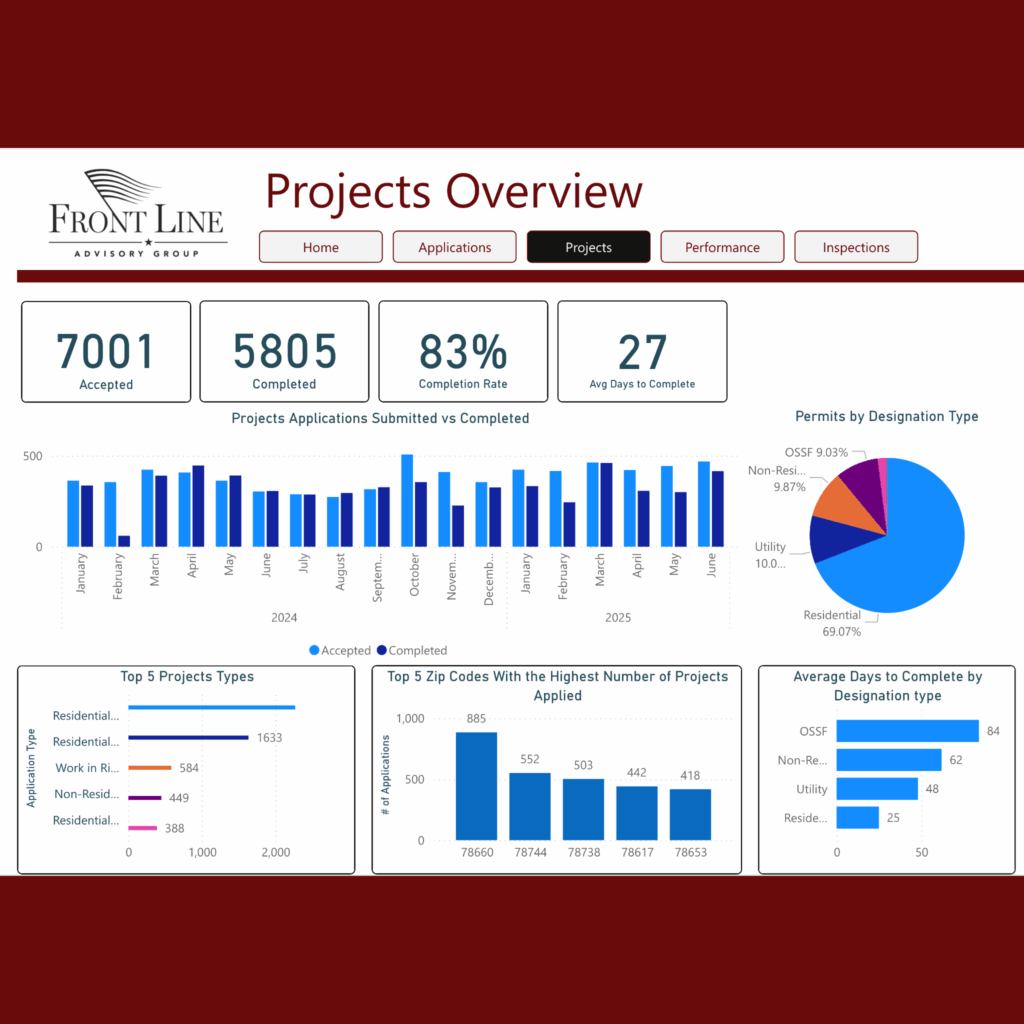
- Clear, repeatable reporting to elected officials and the public
Most cities and counties have talented engineers, public works teams, and finance departments. But they rarely have a dedicated, specialized program controls unit sized for a $200 million, $500 million, or $1 billion bond program. Even if they did, building that capability internally for a one-time bond cycle is expensive and slow.
This is where third-party controls management firms come in.
Why an Independent Controls Partner Matters
An independent controls firm is not there to pour concrete or draw plans. Its mandate is to protect the program: to make sure the right information is visible, early, and in a form that decision-makers can act on.
Several advantages stand out:
- Independence from design and construction interests.
When the same entities responsible for delivering projects control the schedule, cost forecasts, and reporting, there is a built-in bias toward optimism. A third-party controls firm provides a neutral view of risk, slippage, and cost growth—before they turn into headlines. - Portfolio, not project, thinking.
Most overruns are not caused by a single catastrophic project, but by small slips across many jobs that compound over time. Controls firms are structured to look across the entire bond portfolio and rebalance: delaying low-priority scopes, resequencing work, or repackaging bids to protect the program as a whole. - Standardization and discipline.
Left alone, each project team tends to invent its own spreadsheets, its own cost codes, its own status templates. A controls firm imposes a common language: one dashboard, one structure for budgets and schedules, one set of key performance indicators. That discipline is what allows a city manager or county judge to see, in a few pages, where the risks really are. - Better transparency to constituents and rating agencies.
Bond oversight committees, local media, and rating agencies are increasingly interested in how capital programs are governed—not just whether the debt service fits into the budget. Independent controls reporting signals seriousness: that the municipality is tracking risk, contingency, and delivery performance with the same rigor that investors expect from the private sector.
Not a Luxury—A Risk Mitigation Tool
Critics sometimes view third-party program controls as an added layer of cost. The better comparison is insurance.
A modest percentage of program value invested in controls can help avoid much larger costs: late recognition of overruns, reactive scope cuts, emergency tax conversations, or a damaged credit profile. In an environment of rising construction prices and voter skepticism, that trade-off is becoming easier to justify.
Getting the Model Right
For municipalities considering this route, the key is to define the role clearly:
- Position the controls firm as an extension of the owner, not a subcontractor to a designer or builder.
- Require integrated reporting across schedule, budget, and risk—not just “project updates.”
- Tie the firm’s performance to clarity, timeliness, and usefulness of information, not to project volume.
Large bond programs will always be complex. The question is whether that complexity will be managed proactively, or discovered too late. As infrastructure needs grow and public scrutiny increases, third-party controls management is less a luxury than a prudent baseline—another tool for ensuring that what voters approved on paper actually gets built on the ground, on time and within budget.
Front Line Advisory Group (FLAG) is a Program Management Consulting (PMC) firm focused on delivering bond-funded infrastructure projects on time and on budget through disciplined management and data-driven controls. Our mission extends beyond consultation – we empower our clients to realize the full potential of their investments, ensuring tax dollars are put to maximum use through astute Program Management Consulting. For more information or to commence your journey towards transformative bond management, reach out to us at Info FLAG