

Every few years, a new wave of infrastructure money reaches local governments — a bond election, a state revolving fund cycle, a federal grant program, a legislative appropriation. Each time, the conversation in city halls and county offices is the same: how much can we get?
It’s the wrong question. Across capital improvement programs, the entities that struggle aren’t the ones who lose funding fights — they’re the ones who win the money and then can’t put it to work fast enough to matter. The real constraint on public infrastructure delivery isn’t capital availability. It’s readiness.
What “Ready” Actually Means
Funding programs — whether a state water board, a federal formula grant, or a local bond — don’t simply distribute money to whoever needs it most. They score applicants, and “readiness to proceed” is almost always an explicit factor. In practice, that means a jurisdiction needs, before the funding window even opens:
- A project scoped to at least preliminary design, not a placeholder line item
- A cost estimate built on current pricing, not a number carried forward from an old study
- Site control, easements, and permitting status resolved or clearly on track
- A schedule with the critical path identified
- Evidence the entity can manage and, where applicable, repay the money — audited financials, rate studies, demonstrated administrative capacity
None of that can be assembled in the weeks after an award is announced. It has to exist before the application is filed. Jurisdictions that treat funding cycles as a starting gun, rather than a deadline for work already underway, are competing with one hand tied behind their back — and losing dollars to communities that started preparing a year earlier.
The Capacity Gap Nobody Talks About
There’s an uncomfortable pattern in public infrastructure funding: the places with the greatest need often have the least internal capacity to compete for or manage the money once it arrives. A city of a few thousand people rarely has a full-time grants administrator, in-house engineering staff, or a project controls function — yet it’s competing against metro utilities with entire departments dedicated to exactly that.
Program set-asides and disadvantaged-community provisions help close part of this gap, but favorable rules don’t fill out applications or run a construction program. Smaller entities are usually better served by pooling resources — through regional partnerships, councils of governments, or a third-party program manager — than by trying to build permanent capacity for a program that may only run a few years.
Winning the Money Is the Easy Part
The harder, less-discussed problem shows up after the award: keeping the program on schedule and on budget long enough to actually deliver what was promised. This is where most public trust in infrastructure spending is won or lost. Voters and taxpayers don’t remember how a bond or grant was won; they remember whether the road got built, the pipe got replaced, and the number matched what they were told.
Three disciplines separate programs that deliver from programs that stall:
Escalation-aware budgeting. A cost estimate is only as good as the date it assumes construction will actually happen. Programs that lock in estimates years before bidding — without an explicit, documented escalation assumption — routinely discover significant gaps between funded amount and bid price. That gap forces descoping, supplemental funding requests, or delay, all of which erode public confidence.
Program-level controls, not project-by-project management. A single integrated schedule, consistent cost reporting against a defined baseline, formal change control, and a documented risk register catch problems while they’re still cheap to fix. Managing a multi-project program as a collection of separate efforts, each reported differently, is how small overruns become large ones before anyone notices.
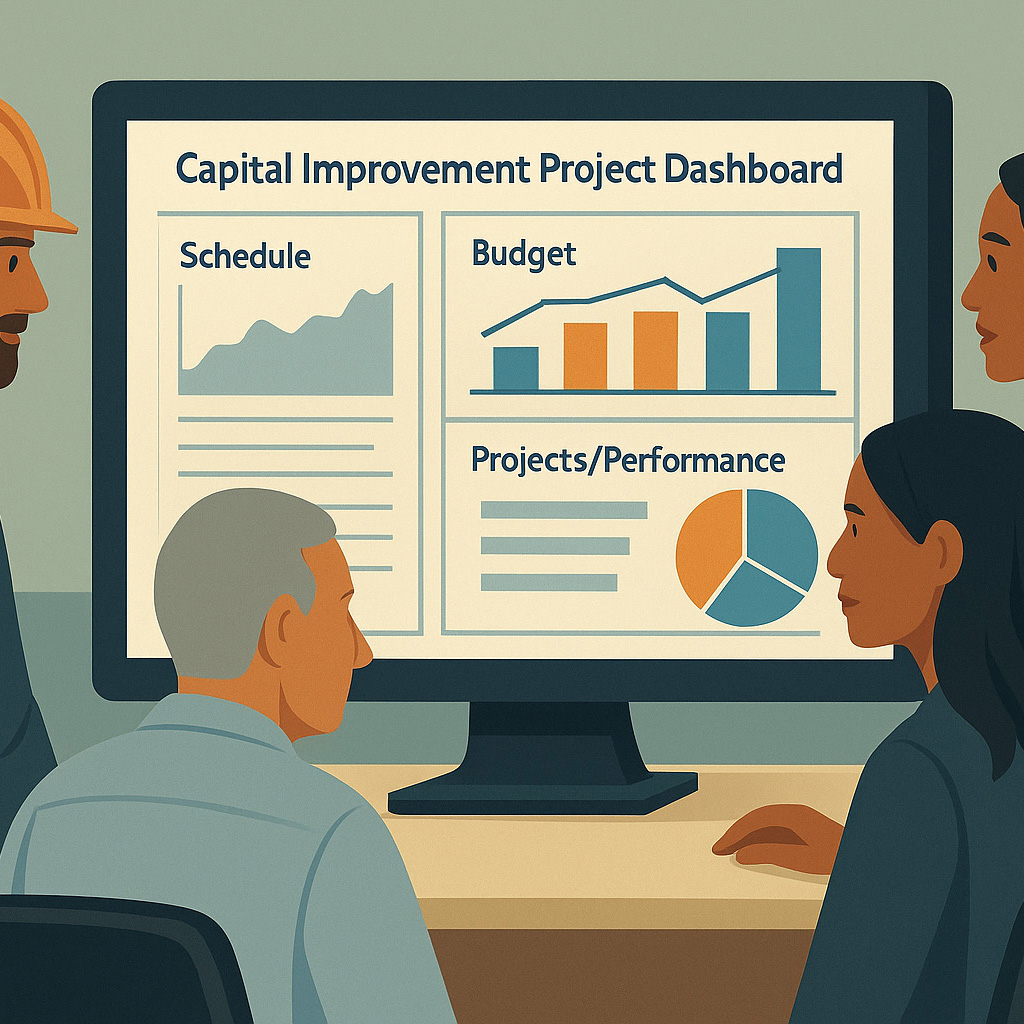
Transparent, ongoing public reporting. A dashboard or regular public update showing what’s funded, what’s under construction, and what’s complete does more to protect the next funding request than any single press release. Communities that can point to a track record of delivering as promised have an easier time at the next ballot box or the next grant cycle — and communities that can’t are the ones you read about.
The Real Lesson
Public infrastructure funding is cyclical — bond elections, revolving fund rounds, and grant programs will keep coming. The jurisdictions that consistently capture their share aren’t the ones with the most compelling need. They’re the ones that treat readiness as a continuous discipline: projects kept at a fundable stage of design, estimates kept current, and program controls already in place before the money shows up.
The money is rarely the scarce resource. The capacity to be ready for it is.
Front Line Advisory Group (FLAG) is a Program Management Consulting (PMC) firm focused on delivering bond-funded and grant-funded infrastructure projects on time and on budget through disciplined management and data-driven controls. Our mission extends beyond consultation — we empower our clients to realize the full potential of their investments, ensuring tax dollars are put to maximum use through astute Program Management Consulting. For more information, reach out to us at Front Line Advisory Group.